When Covid arose in 2000, athletic trainers were put to work. While sports and school were out, we were willing to call patients and field phone calls at doctor’s offices, get trained on new skillsets to allow us to work in the hospital, take on the Covid ward alongside nurses, and screen patients entering into all medical facilities. We were the protectors. When we were permitted to return to sports in June, we recreated emergency action plans, enforced rules on how to proceed, were required to be present at every event. We had to document every kid who walked in the door, where they were, usher them to practice, take temperatures and ask a series of every single kid. Ensure they were wearing masks and standing far enough apart. Then when someone actually got Covid if they were an athlete we were responsible for doing all the calls to parents and tracing. When students returned to school we were screening in the mornings and after school for every kid as they were dropped off. Documenting and tracing, working alongside the school nurse. Testing students for covid and actually getting trained to give covid shots. This was over 1.5 years where nothing was normal across the countries and athletic trainers stepped up to a challenge they weren’t expecting.
Athletic trainers in Western North Carolina as well as likely in East Tennessee and parts of South Carolina and Georgia were placed in yet another challenging situation when Hurricane Helene hit. Once securing their own homes, safety, and friends and family, they jumped right in to help others.
The domains of the field of athletic training include:
Prevention
Clinical Evaluation and Diagnosis
Immediate Care
Treatment, Rehabilitation, and Reconditioning
Organization and Administration
Professional Responsibility
We are a field of medicine that is trained in many different fields of medicine. We are chaos coordinators. Skilled in the act of triage of most all medical concerns. Excellent with orthopedics and concussions, practice regularly emergency management and create emergency plans. Are the untrained experts of the weather; and responsible for the creation of planning of how this is managed. And we can recognize when we need to send to a specialist and which one. We have direct lines of communication with cardiologists, primary care physicians, sports medicine physicians, physical therapists, radiology locations, pediatricians, and orthopedists. We are trained and skilled at evaluating a sprained ankle, rehabilitating a shoulder, taping a wrist, doing a concussion evaluation, texting coaches updates on their athletes, checking an athlete’s skin wound all within a 15-20 minute time frame, and perhaps even sending an email, call, or text to a parent or provider all while personalizing each one. Athletic trainers are trained to recognize a need. They see the holes and fill them. They notice when there’s a risk or what may be best to take care of others on multiple levels. As we are with our athletes daily and have the ability to create relationships with all 250-800 athletes at our schools and their families. Our experience becomes much more personal and care for more than just the immediate need, but also the mental needs. Here are some examples of how an athletic trainers are able to utilize their skillsets to transition into a community emergency need.

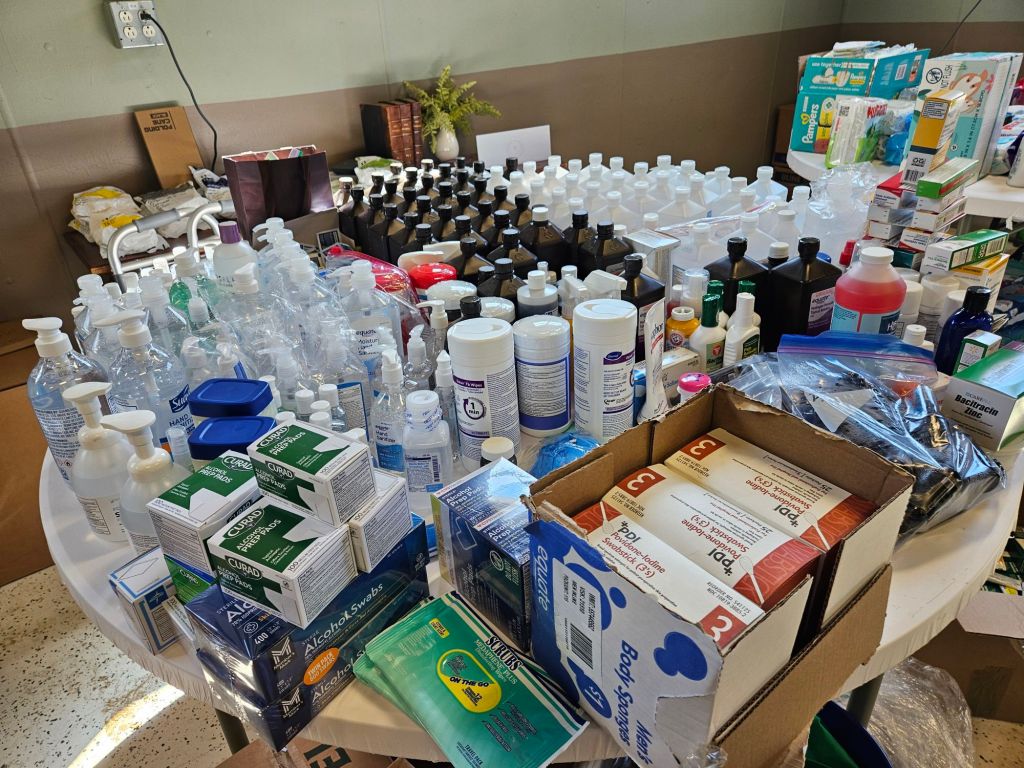

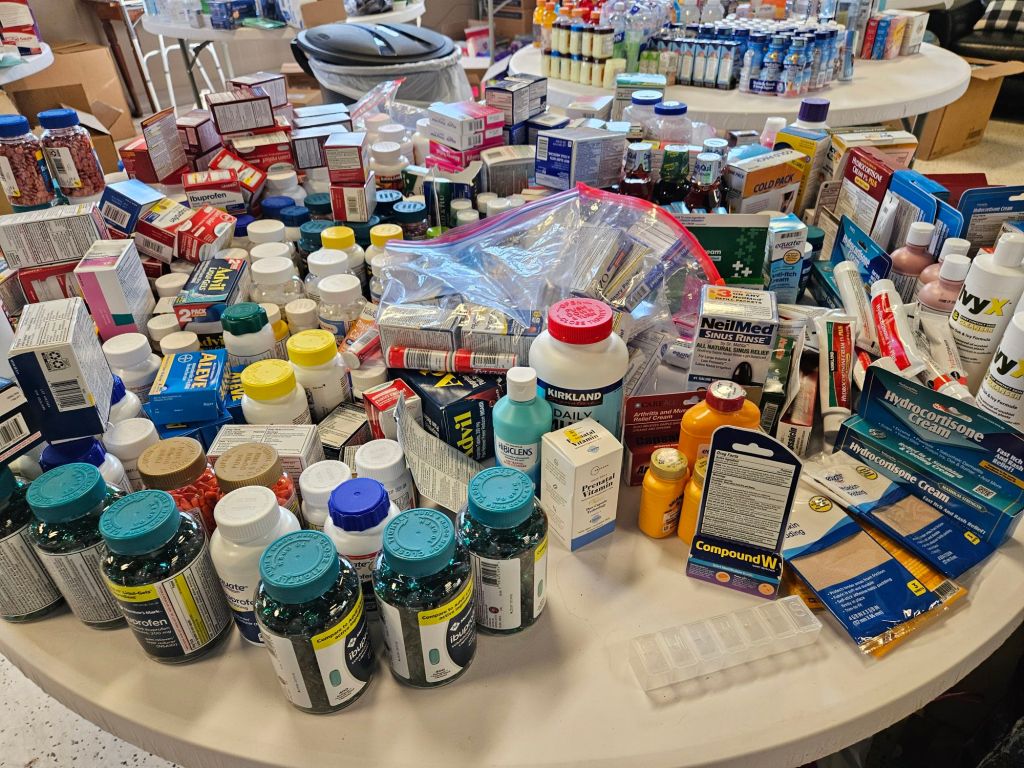
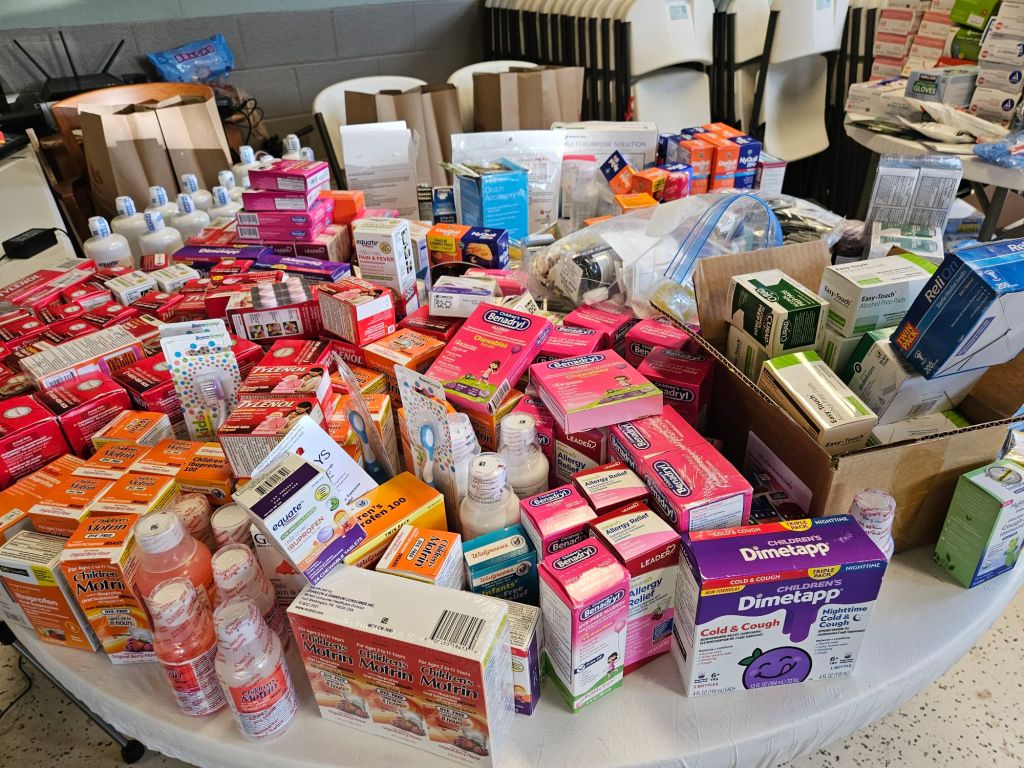

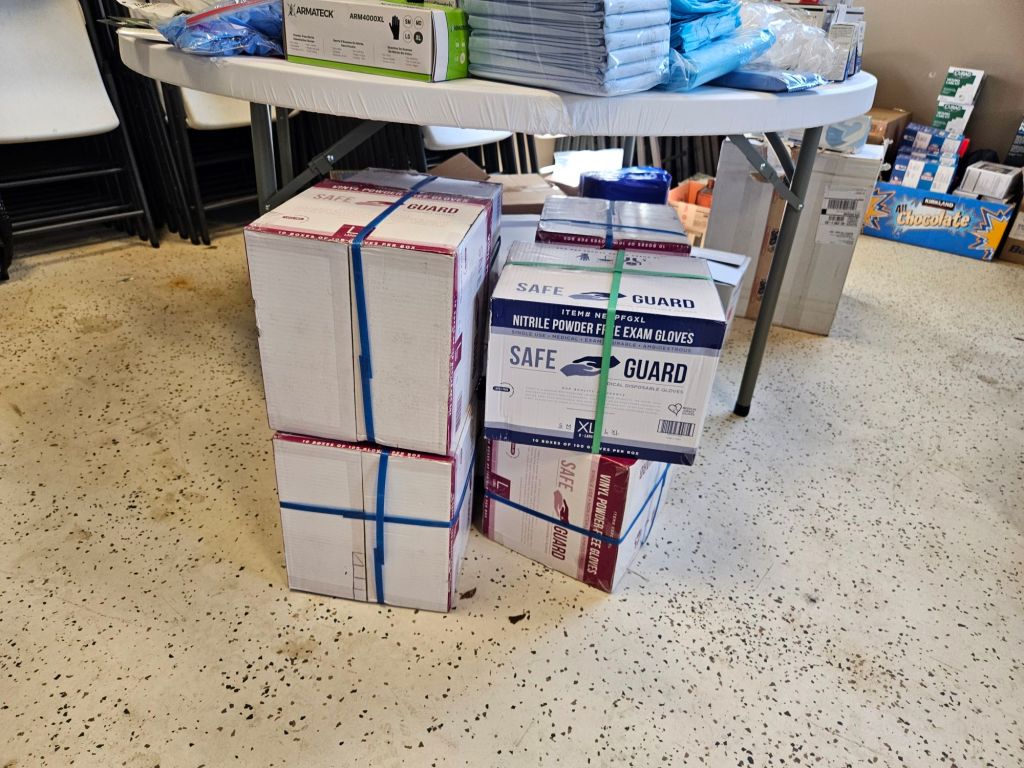
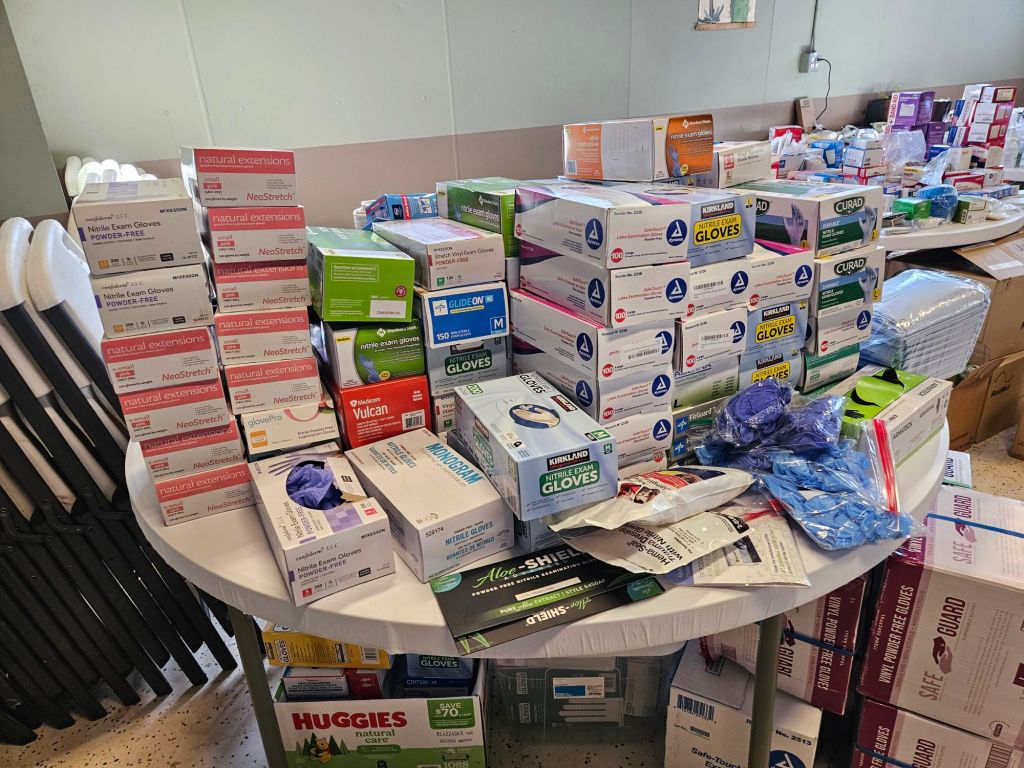
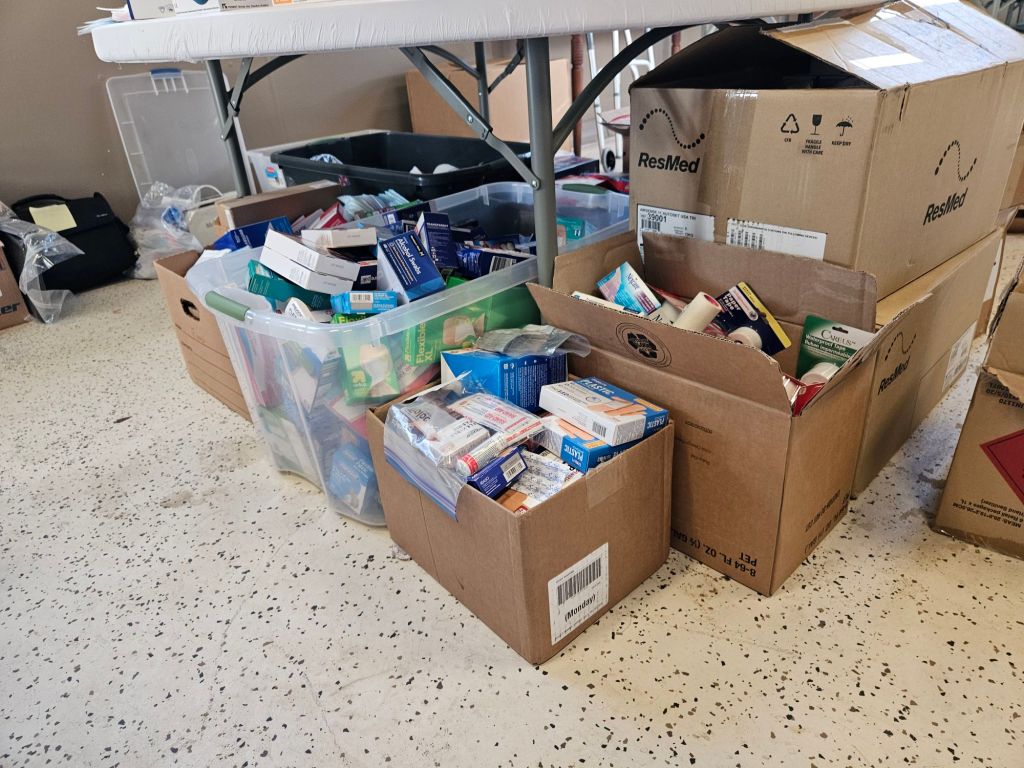
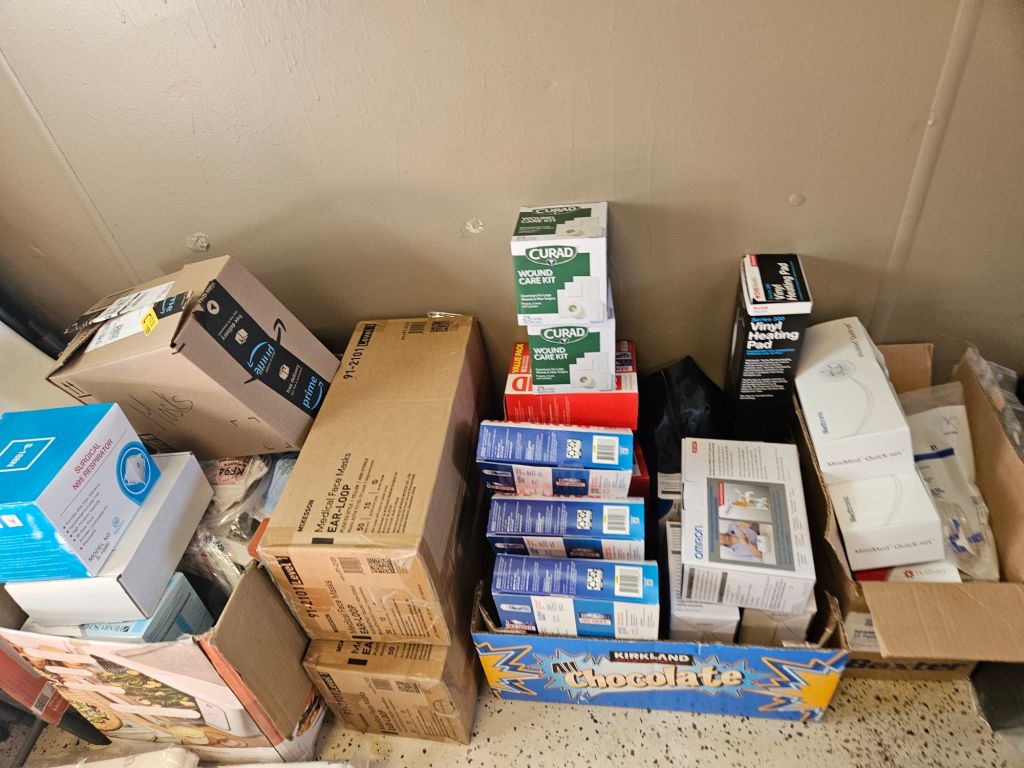
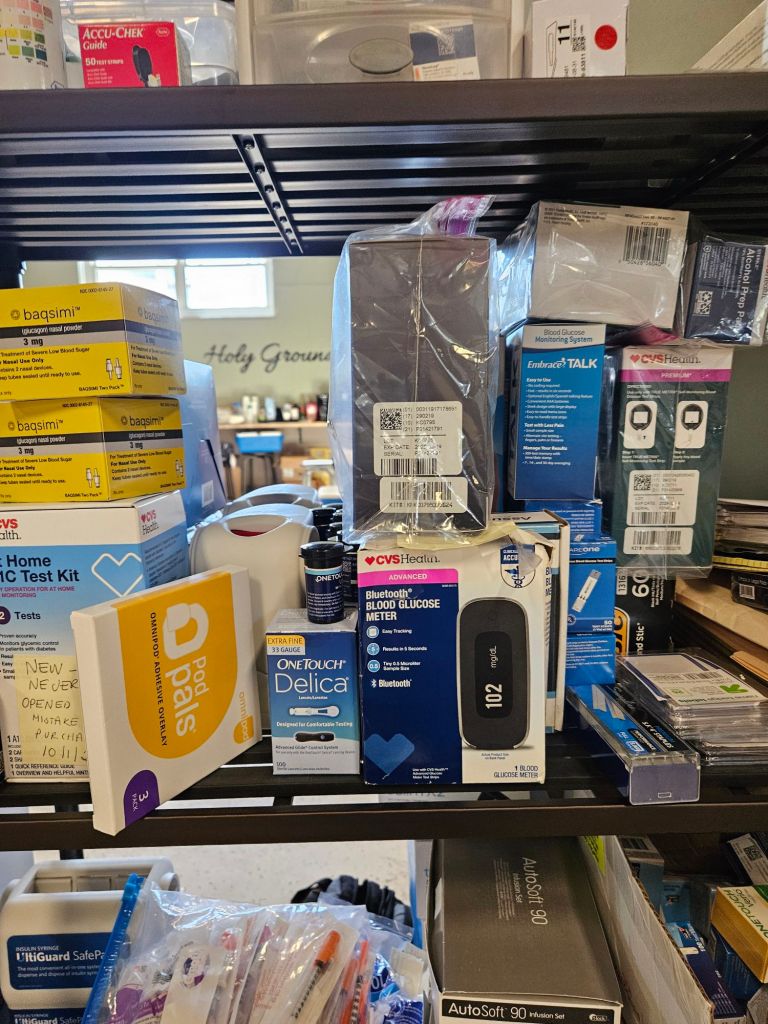
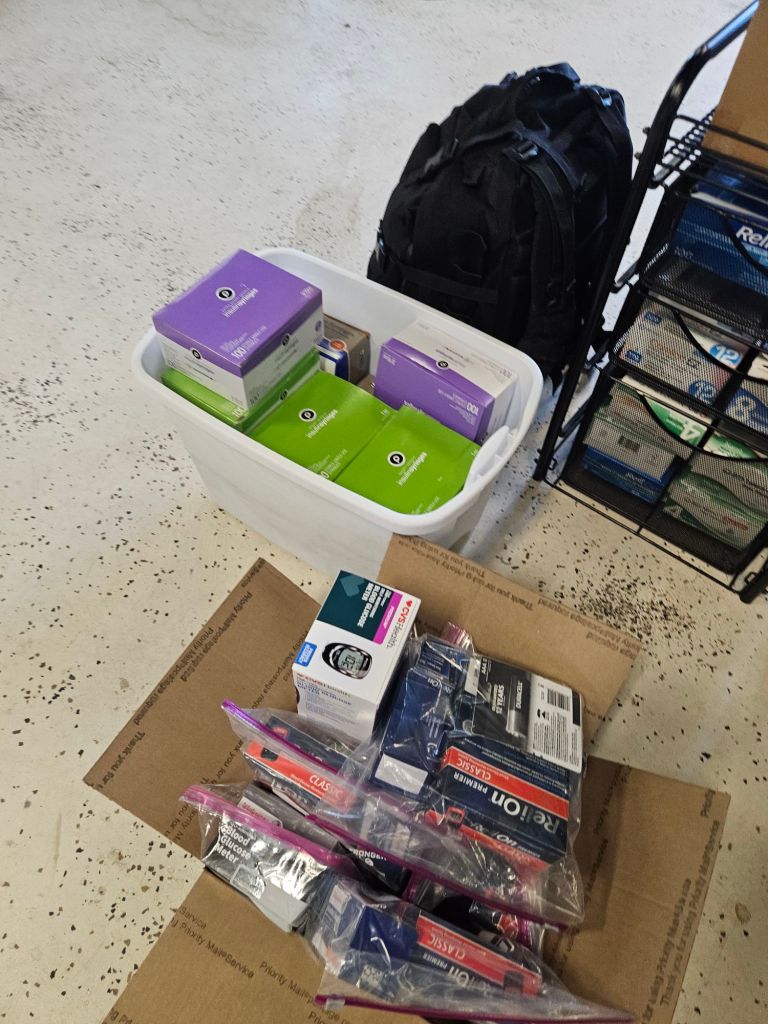
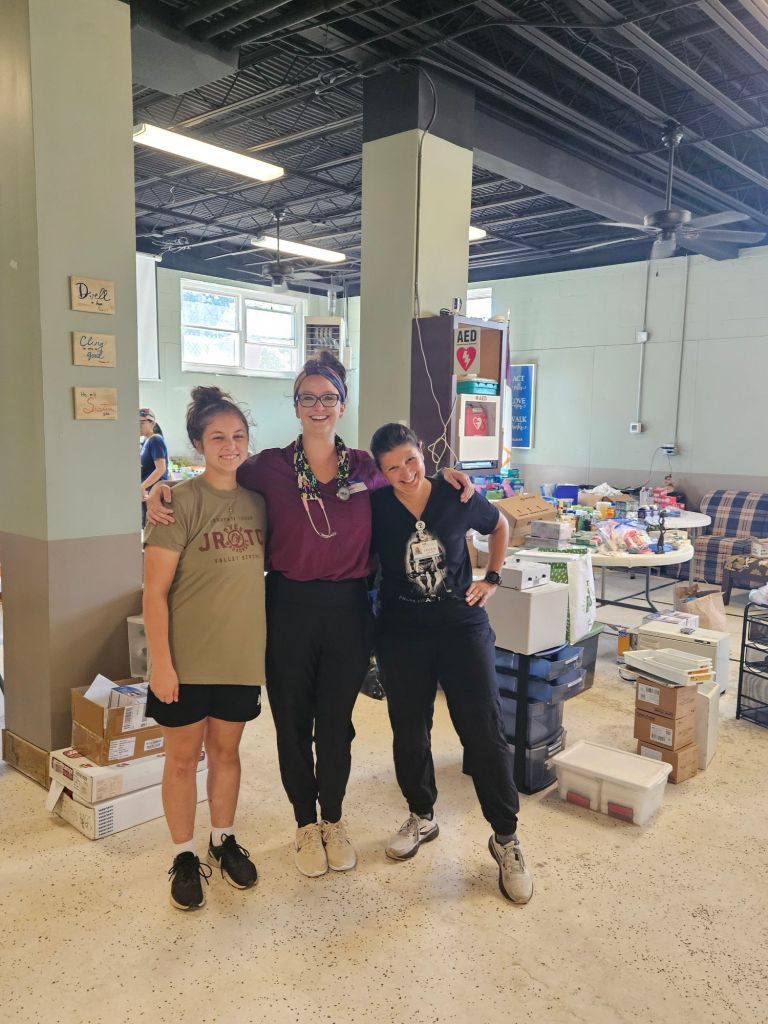
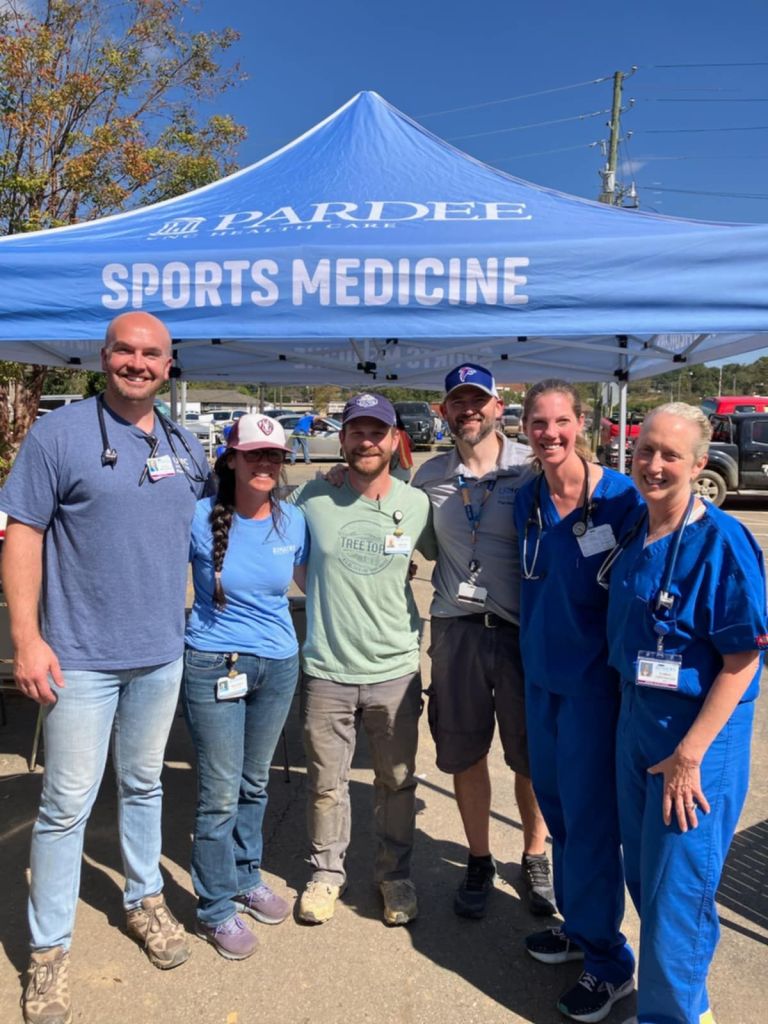
The first instance I’ll share is how one athletic trainer jumped in immediately helping the hospital until her need for being in the community rang out louder. Immediately after the storm, there were a good amount of people who could not make it to work at the hospital. As well there was no electricity and there was only nonpotable water in Henderson County. Pardee Hospital, run by their back up generators, also set up a local high school on a generator as well to allow people who depended on electricity to run life preserving medical devices to come and be. These were normally independent people in their homes. They were permitted one caregiver to come with them as needed. However medical staff was needed to monitor and maintain the gym. So as our boss describes us to the hospital staff, the Calvary came in as they were in desperate need to send people home to sleep. This position also was paying more $ than our current hourly rate to get help. However not long after that first day, it became evident that many of our communities desperately needed more help from able bodies. And thankfully our employer continued to count our hours towards our job as long as we were in the community.Lysha transitioned from helping manage and work in the High school generator/power clinic to helping with her church’s local distribution center. As supplies came in, she assisted in collecting, sorting, and distributing. She immediately became the medical consult in the distribution center. Utilizing her skill set as an athletic trainer that she has from her education, working in the secondary school setting for at least 10 years and also in the clinical setting for 8 years with a Sports Medicine Family Practice provider to assist anyone needing medical care. She has been doing this when not at school and sports since they returned sooner than later.
Distribution centers are a job in need. The ability to jump in and just grab, move, sort, and if you’re able to be on the distribution site, you’re checking in with people constantly to see what they need, listening to their stories, seeing tired or sometimes happily surprised faces as you attempt to load them down with everything they may possibly need for their home. Some people come and the tell you they lost everything. Some will tell you they are housing 4 families. They may be collecting things they never expected to be collecting… like feminine products. Some may come in with a medical need and you need to decide with them which medical OTC you have in stock to help them. Doesn’t sound very medical…however these distribution centers move so fast that it can seem very chaotic. Athletic trainers thrive in chaos. Another two of our athletic trainers, Becky and Barbara, helped in one of the most desperate areas’ distribution centers in Chimney rock area. They both did this with small kids and school and sports starting back sooner than later.
Mike is another athletic trainer who utilized his abilities to be helpful to others. He was lucky enough to get water and power back much sooner than others and had gas more available to him where he lived. So Mike utilized every tool he had to offer and help anyone in the community he could with supplies and help, bringing gas and water to anyone in need.
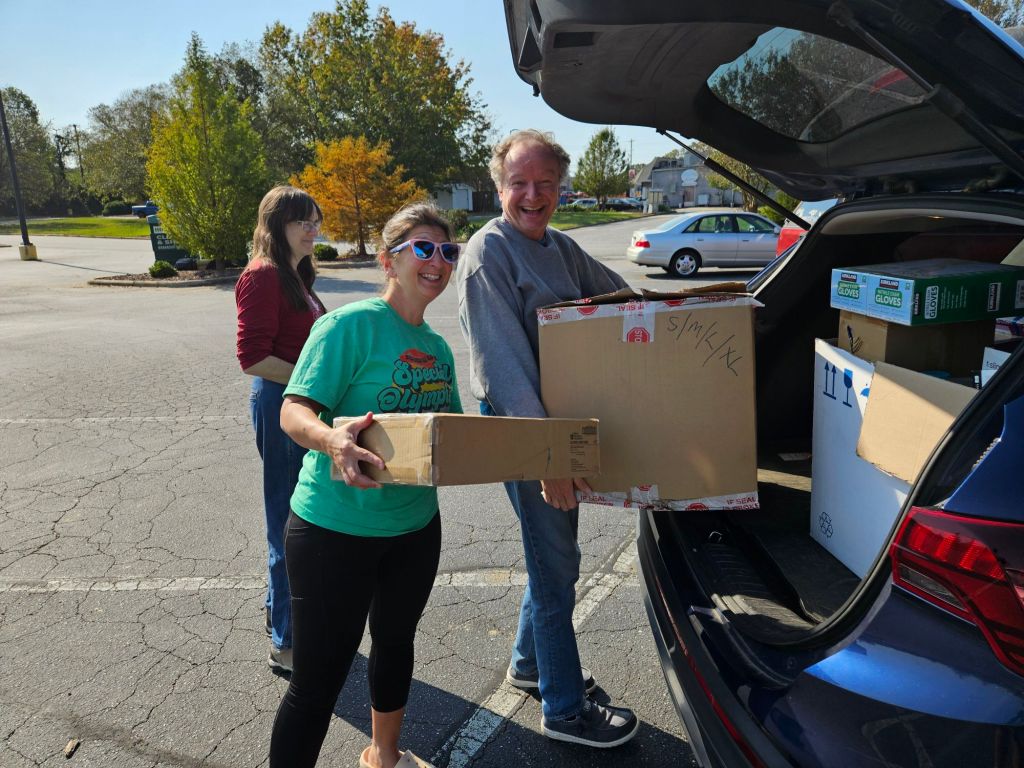
Some of our athletic trainers had to leave town to get away initially. Madi was one who immediately created a list of supplies that those who couldn’t leave needed and came back and loaded up our vehicles with supplies that were precious before the mass donations started coming into the distribution centers.
In Avery County the athletic trainer doubles as a Paramedic. No shock to any of us with his always helpful demeanor; he worked at the fire department daily. He assisted in running calls, performing welfare checks, all the while receiving, organizing, and taking supplies to other areas and fire departments. His, like many athletic trainers, efforts in the community slowed although collided with his job as the athletic trainer at Avery County High School when sports returned and that was where he was needed.
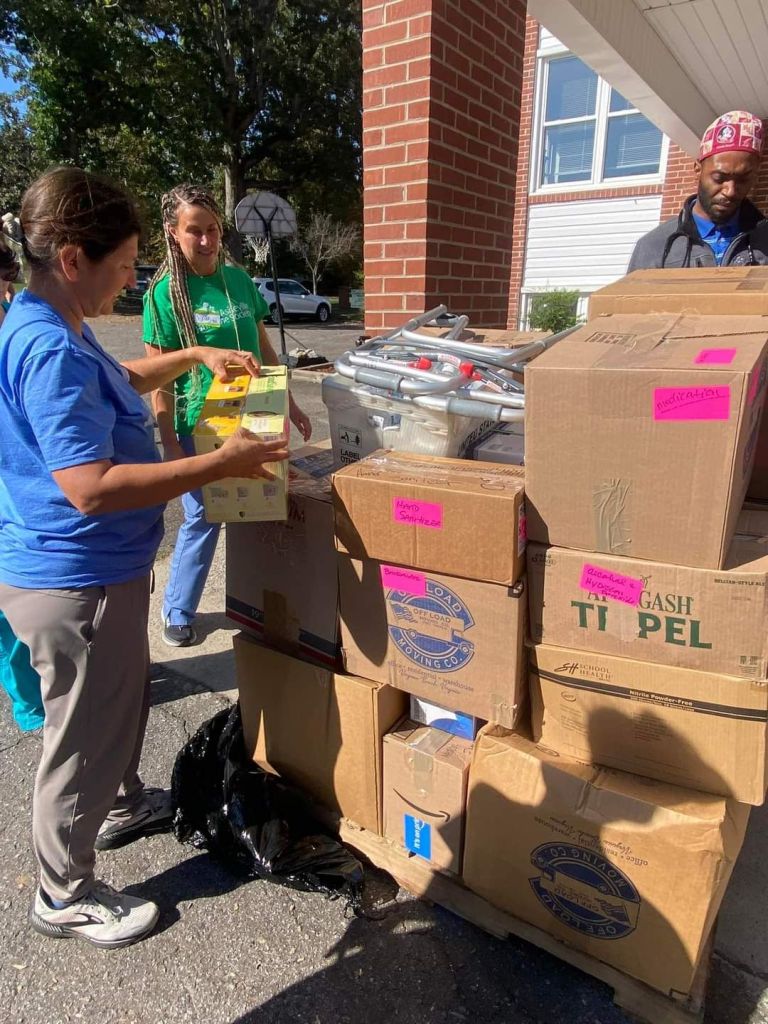
The Montreat college Athletic training room was fully flooded. But that didn’t slow down Justin’s mindset to find places to volunteer and help and work between the Black Mountain Medical Center and the hospital needs at Pardee. He took the role that is less enjoyed by working the 12 hour night shift assisting at the Hendersonville High generator clinic. He’s now starting to balance the return of sports on a minimal supply of medical supplies since his medical kit was in his car during all of this.
Holly works in Canton where the River runs right by through the center of town and by the football field. For the second flood in a row this field and town has been devastated by water. Holly has always been the kind to throw herself into the mix for her community. She immediately found ways to volunteer with churches to do home clean ups, involving cutting out insulation in a crawl space of mud. She helped gut another home cutting out the dry wall and insulation. When she wasn’t doing these things, she helped with distribution centers and distributed supplies.
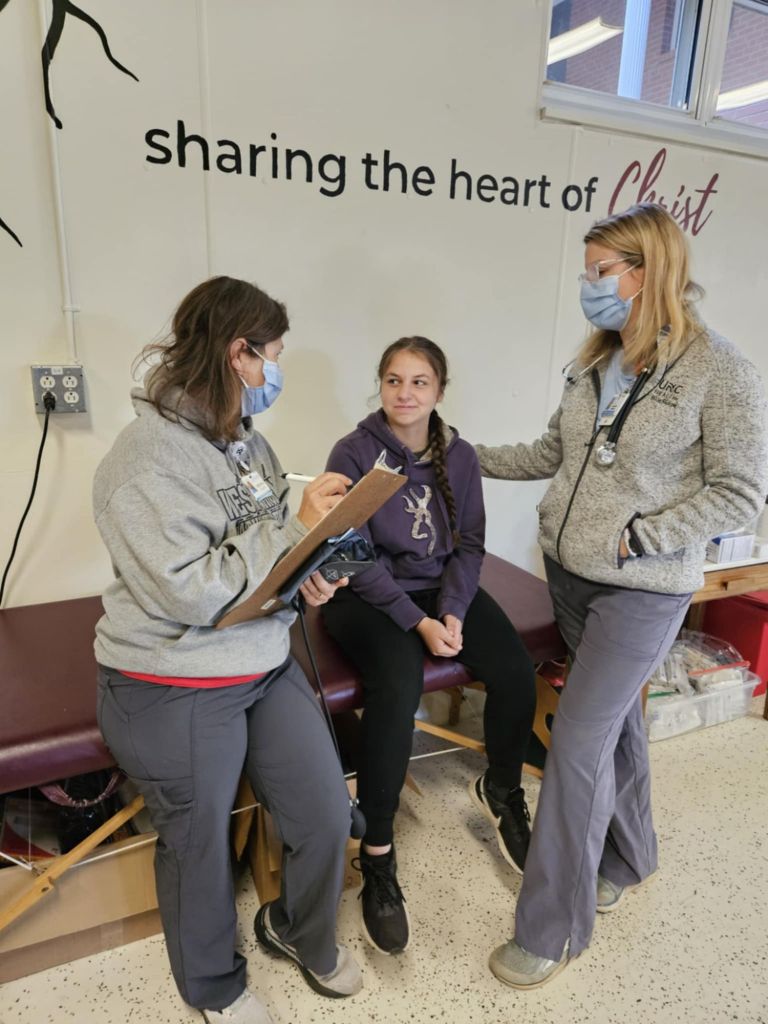
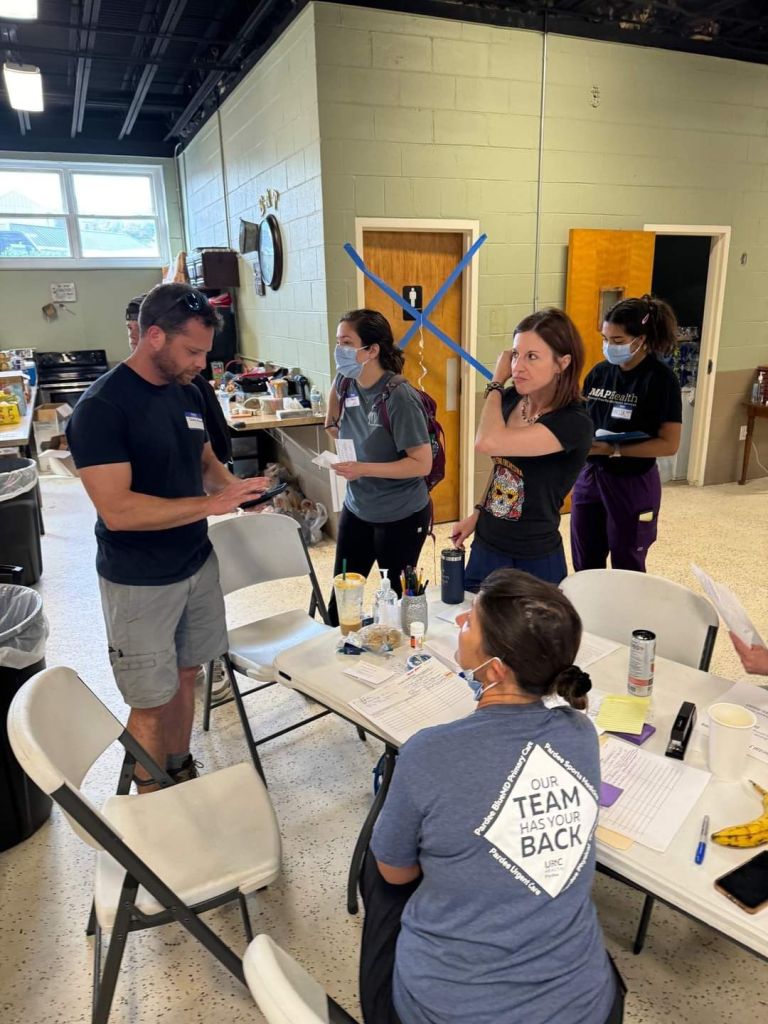
In Black Mountain, Kevin called Crystal after attending the first town meeting after the storm. He mentioned that we needed to get a clinic like the one in Hendersonville going as the local town government and chamber was figuring this out. Crystal contacted the chamber and connected with a local Nurse Practitioner with the idea to take this further and provide an actual free medical clinic to the community. They met with around 50 mental and physical health providers, and set out a grassroots operation to start a free medical clinic for anyone who walked in the doors. Shanda and Kevin branched off and took a group to do the same in Swannanoa. With medical donations, medical providers looking to serve, and ancillary support, both Black Mountain and Swannanoa were able to run 2 very efficient medical clinics in their communities for 3-4 weeks after the storm. Medical Doctors of various specialties, Dentists, Optometrists, Physician Assistants, Nurse Practitioners, Certified Athletic Trainers, Registered Nurses, Occupational and Physical Therapists, Medical Assistants, Students, and Mental health specialists of all types all joined in to help and work within their specialties. This included communications with various healthcare providers and assisting organizing what resources we could bridge the gaps for while those in the community had no access. This included to oxygen sources, diabetes care, battery powered nebulizers, and even assisting providing to those who lost homes DME supplies. We had providers to keep prescriptions filled while certain pharmacies and doctors offices couldn’t open. Our clinics were able to evaluate orthopedic injury, treat and/or suture wounds and lacerations, set patients up to get tetanus shots with the Health Department’s mobile clinics that popped up. We sent staff out to homes to check on medical needs as were determined needed.
All of these instances were examples of how athletic trainers have the skillset to take a situation from out of the norm and assist and create a program that benefits the public alongside every other medical healthcare professional.
Who wouldn’t possibly want an athletic trainer in their court?



 runwithboys